en


Attractions
The Jet d'Eau
One hundred and forty metres high and 500 litres of water per second at 200km/h: that’s the Jet d’eau! A true icon of Geneva, the gigantic water fountain has a beautiful story to tell but did you know that its presence in Geneva is almost an accident?
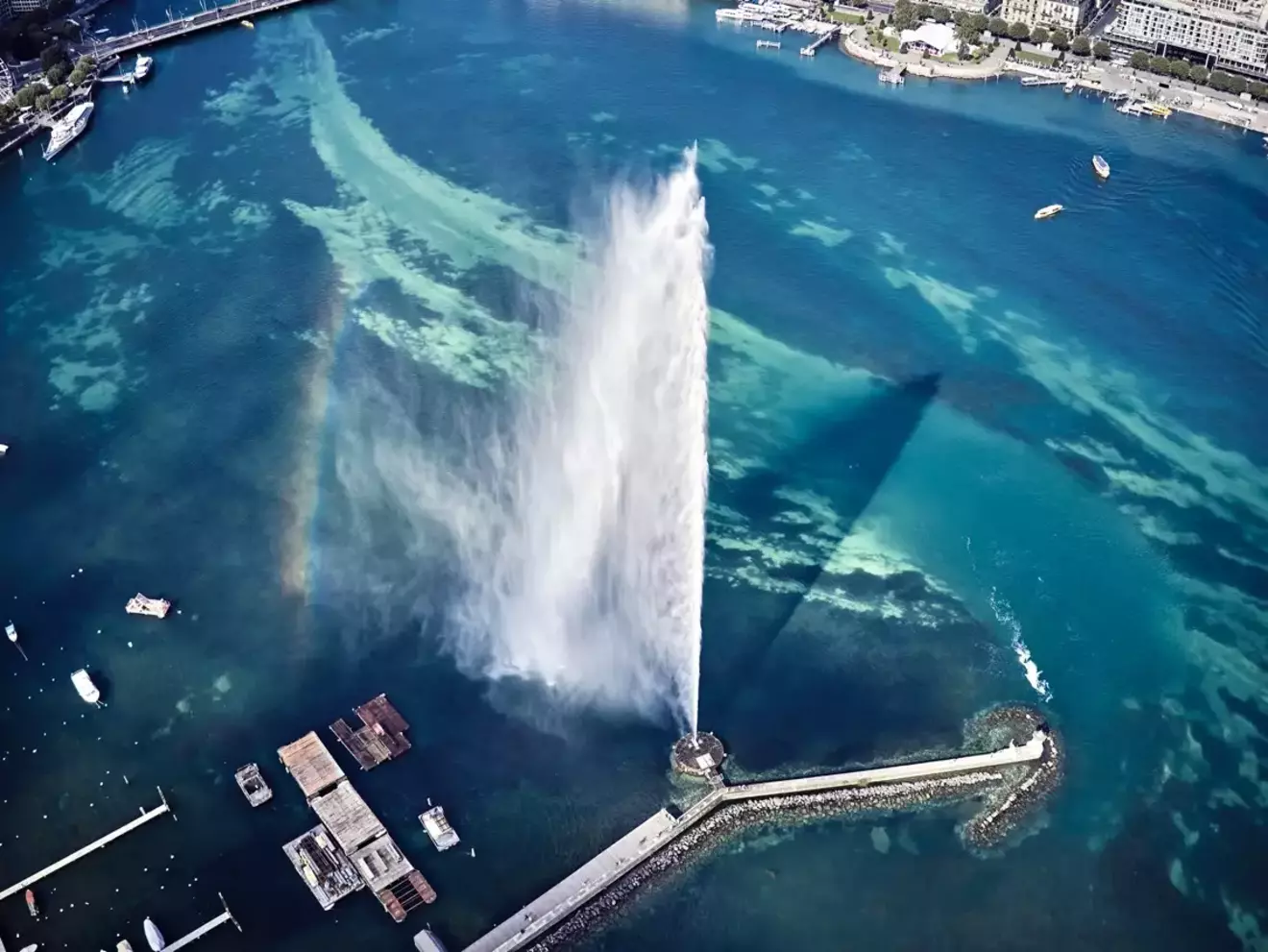
Do you know the secret of the Jet d’Eau?
In 1886 the hydraulic factory that distributed the Rhone’s energy to Geneva’s craftspeople and watchmakers was forced to create an open-air outlet for the over-pressurised water when the workshops closed in the evening. The place generated so much enthusiasm and excitement that it became a real attraction for locals and tourists.
In 1891 a new Jet d’Eau was created at its current location in the harbour. In 1951, thanks to a pumping station on the lake, it rose from 90 metres to a height of 140 metres. It should be noted that its height is now at its maximum and cannot be exceeded because of the surrounding houses, which would then run the risk of being sprayed with water!
The Jet d’Eau, Geneva
Discover the story of Geneva’s iconic Jet d’Eau through a sign language video and an audio guide.
Jet d'Eau — Audio Guide
Duration: 2 minutes 25 seconds.
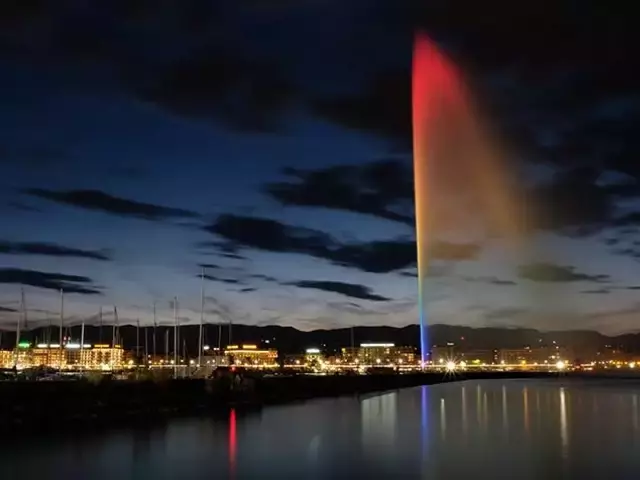
Where does its colour come from?
The Jet d’eau owes its white colour to a nozzle that fills the projected water with millions of air bubbles. A lighting system lights up the water fountain for special events and tributes.
Find the calendar of illuminations here.
Who takes care of the Jet d’eau on a daily basis?
Five retirees from the Services Industriels de Genève take turns monitoring the Jet d’eau to shut off the valves when the wind blows too strong, or the temperatures are too low. The Jet d’eau guardians are always on the watch!
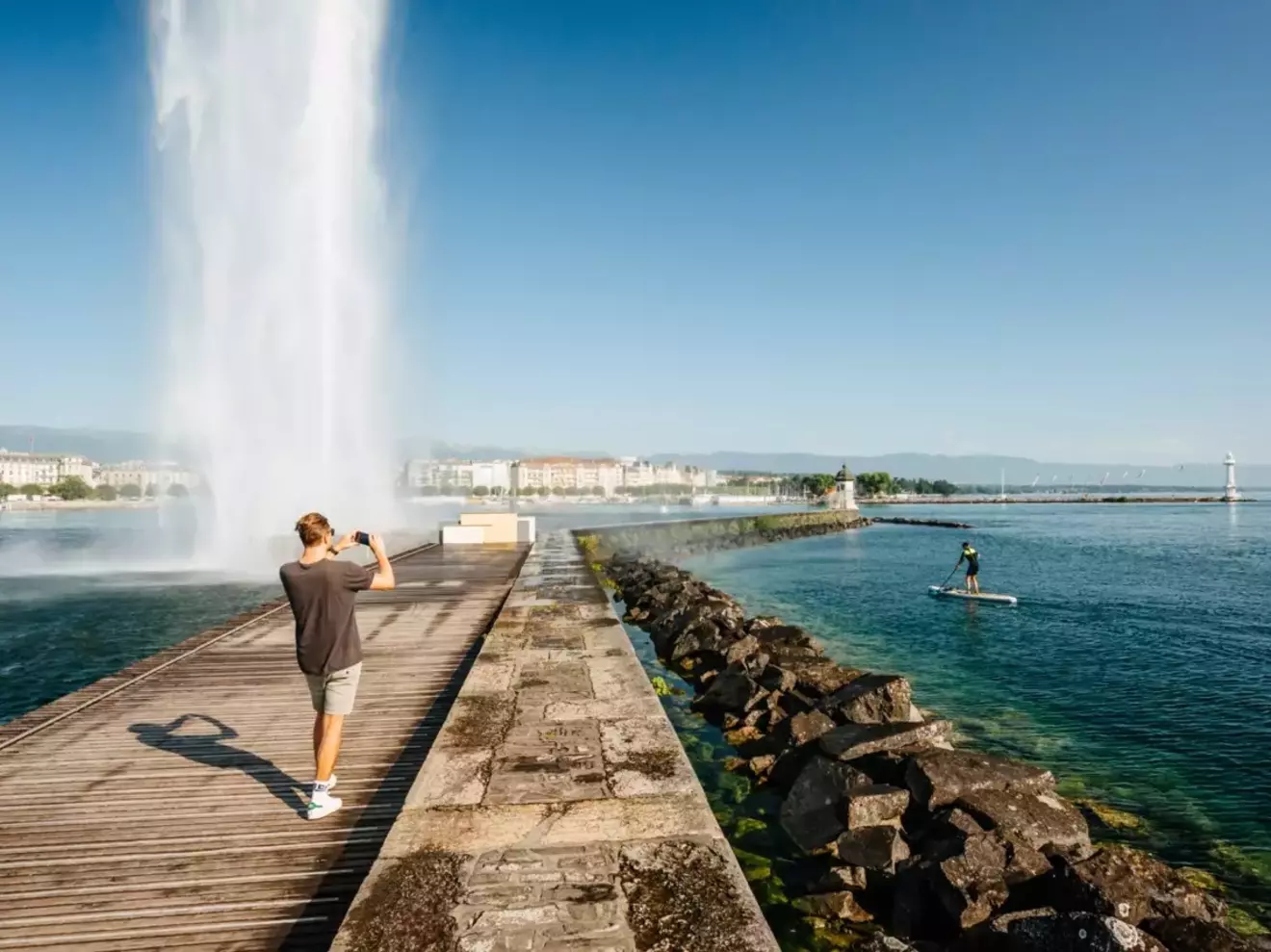
Good to know for maths enthusiasts: the amount of water propelled is super heavy!
Given that the average height of Geneva’s Jet d’eau is 140 metres, that the speed of the water is 200 km/h, and that its flow is 500 litres per second, one can work out that the water that is projected high above the lake weighs … 7 tonnes! And between its exit from the pipes and its return to the lake, each drop of water spends 16 seconds in the air. A magnificent and technical spectacle!
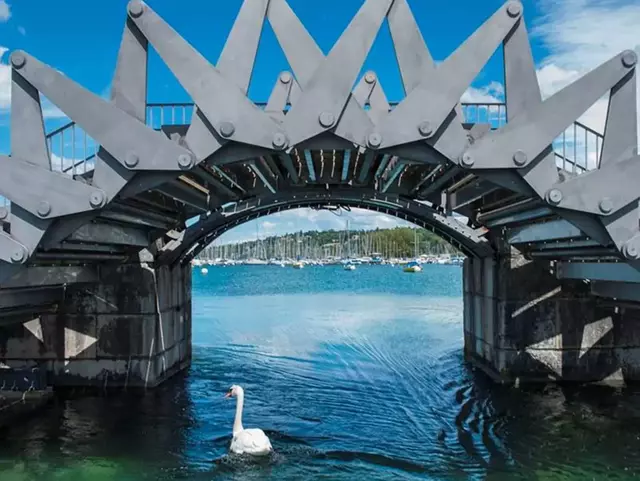
Walk right up to the Jet d’Eau via the mobile footbridge
An exceptional show for architecture lovers and thrill-seekers!! This unique invention provides pedestrian access for everyone on the Jet d’Eau pier while allowing boats to pass at given times.
In this ideal place to admire Geneva’s harbour, sunbathe, or take a memorable selfie with the Jet d’Eau, lies a jewel of ingenuity: the mobile footbridge, designed especially for this project and which can turn into a staircase when boats pass underneath! If you want to see the Jet d’Eau live, take a look here.
Check out the operating hours and the illuminations here.
Frequently Asked Questions
Generating suggestions
The Jet d'Eau is a famous fountain in Geneva, shooting water 140 meters high into the air.
The Jet d'Eau has been a symbol of Geneva since 1891.
The Jet d'Eau projects 500 liters of water per second.
The water in the Jet d'Eau travels at a speed of 200 km/h.
Yes, a mobile footbridge provides pedestrian access to the Jet d'Eau.
The Jet d'Eau is located at Quai Gustave-Ador, 1207 Genève, Switzerland.
Yes, Les Bains du Jet d'Eau offers swimming facilities at the foot of the fountain.
Visitors can admire the fountain, take photos, and enjoy the surrounding area.
Yes, guided tours are available to learn about the history and significance of the Jet d'Eau.
Check the operating hours and possible closures due to weather conditions before your visit.
You may also like
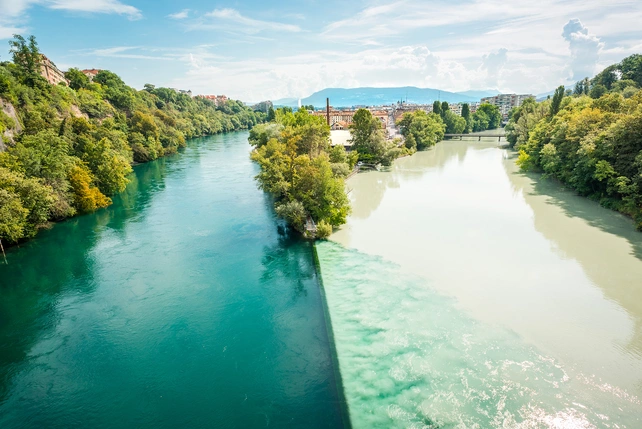
Learn the most interesting fun facts and stories about Geneva!
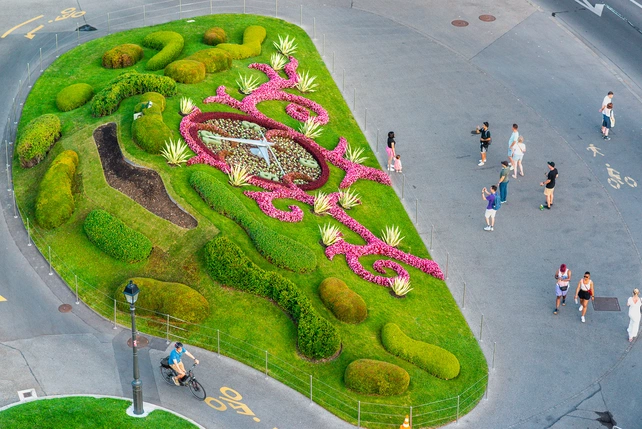
Geneva brings together iconic lakeside landmarks, a historic Old Town, world-renowned science and diplomacy, distinctive neighbourhoods and nearby nature. From the Jet d’Eau and CERN to Carouge, the P...
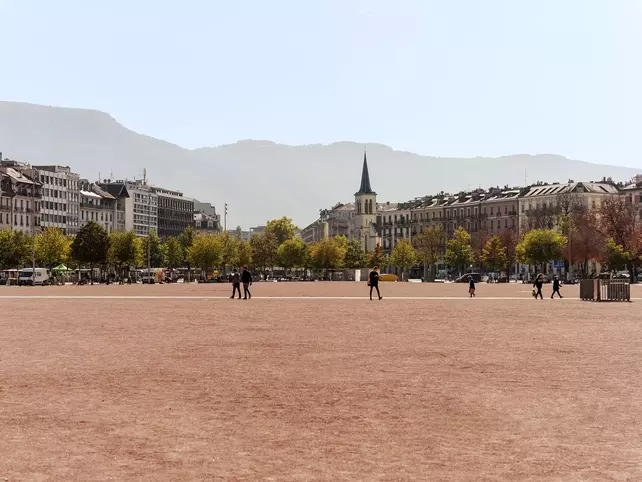
From the gentle Mediterranean charm of Carouge to the cosmopolitan hustle and bustle of Les Pâquis, Geneva encompasses a wide variety of neighbourhoods, each with its own atmosphere. From trendy...