en


L’italiana in Algeri by Gioacchino Rossini
A wind of madness is blowing through Algiers! Between flirty banter, satire and laughter, Rossini is having fun, and we are too!
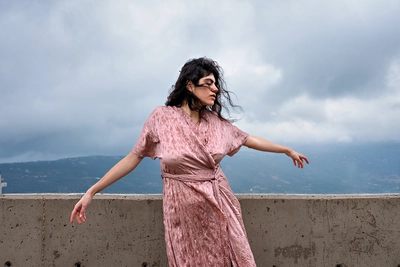
L’italiana in Algeri
Opera by Gioacchino Rossini
Libretto by Angelo Anelli
First performed May 22, 1813 at Teatro San Benedetto, Venice
Last performed at the Grand Théâtre de Genève in 1995-1996
New production
*Glam Night : January 30
At the Bâtiment des Forces Motrices
Sung in Italian with French and English surtitles
Duration: approx. 2h50 with one intermission*
CAST
Musical Director Michele Spotti
Director Director Julien Chavaz
Set Designer Amber Vandenhoeck
Costumes Designer Hannah Oellinger
Lighting Designer Eloi Gianini
Dramaturgy Clara Pons
Chorus Director Mark Biggins
Isabella Gaëlle Arquez
Mustafà, Bey of Algiers Nahuel Di Pierro
Lindoro, Italian in love with Isabella Maxim Mironov
Taddeo, old Italian Riccardo Novaro
Elvira, Mustafà’s wife Charlotte Bozzi
Zulma, Elvira’s confidante Mi Young Kim
Haly, Bey’s servant Mark Kurmanbayev
Dancers Daniel Daniela Ojeda Yrureta & Clara Delorme
Chœur du Grand Théâtre de Genève
Orchestre de la Suisse Romande
ABOUT
An Italian girl in Algiers, a Turk in Italy, an American in Paris, or worse, in Japan… But where are we going? Lost between worlds, though, Rossini was not. Straddled between musical and political periods, post-feudal Papal States, the Napoleonic wars and the emerging idea of nation-states, on the other hand – yes! The birth of the bourgeoisie and changing social mores quickly became the focus of attention for a young Rossini as talented as he was precocious, and who quickly swapped the heaviness of heroic drama and ancient tragedy for an opera bouffa as light as zabaglione.
The son of a father who was half-butcher, half-cornettist and above all member of the Resistance who constantly moved his family from town to town – from Pesari to Ferrara and then to Bologna – to evade prosecution by the papal state henchmen, and of an opera-singer mother, Gioacchino Rossini was a 21 year old already with ten operas under his belt when he took just 28 days to compose his political satire, The Italian Girl in Algiers, which culminates and fulminates in the ironic, far-fetched and absurd finale of the ‘Pappataci’ – an honorary title invented specially for the occasion, far removed from any heroism and in keeping with the tradition of Marivaux in his The Island of Slaves.
In a proto-Risorgimento-like spirit, the composer simultaneously overturned masters and slaves, codes and references, imitations and imitated, nationalisms and exoticisms. From from pastiche to self-pastiche, in a musical kingdom of allusion and quotation that he would cultivate until his death, he became the master of the game of inversions and of the carnivalesque tradition adored by Venice. So then, a work that is carnivalesque as defined by Bakhtine, i.e. comprised of a mixture of opposites (serious- comic, sublime-vulgar, oppressed-liberated), and comprised of “intercalary genres” – parodies and caricatured quotations from a “lost” tradition; which the author, while mastering and devaluing, would triumph over by reinventing the genre.
Comic works hold no fear for French-speaking Swiss director Julien Chavez, and especially not if they have a critical or subversive edge to them. He managed to make us wince in Peter Eötvös’s The Golden Dragon, which the Grand Théâtre presented in 2022 at the Comédie de Genève, as part of its La Plage season. Now he’s taking over the Bâtiment des Forces Motrices to change the exoticism-tainted Marivaudages into an absurdist imaginary world at the genre crossroads. We’re counting on his artistry to liberate the dichotomous myth from the eschatology of revolution, aided by the Rossinian irony revealed by young conductor and bel canto specialist Michele Spotti, the seductive beauty and finesse of French mezzo-soprano Gaëlle Arquez as Isabella, opposite the agile bass and charismatic presence of Nahuel di Pierro as Moustafa, and the clear, light bel canto tenor of Maxim Mironov in the role of the lover Lindoro.
Dates and times
from Friday 23 January 2026
to Thursday 5 February 2026
Event location
Location name
BFM - Bâtiment des Forces Motrices
Address
Place des Volontaires 2, 1204 Genève - 1204 Genève