en


Rousseau at Auction
What happens when scientific and cultural property is auctioned? A roundtable discussion addresses the challenges of auctioning cultural and scientific property.
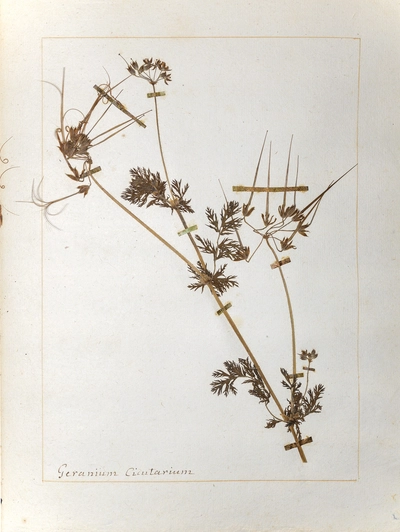
In June 2024, the Auxiliary Foundation of the Botanic Conservatory of the City of Geneva won at an auction in Paris a herbarium created by Jean-Jacques Rousseau (1712-1778) in the 1770s for the enlightened printer and bookseller Charles-Joseph Panckoucke. It is one of the few surviving herbaria that Rousseau created for botany enthusiasts during the last ten years of his life to popularize the study of the plant world.
It was a great relief in the scientific world to see this herbariumend up in public hands.
While the Geneva Botanic Garden was able to acquire an exceptional herbarium of Jean-Jacques Rousseau at auction, this is often not the case for many other scientific items. Natural history specimens and autographs of scholars or famous figures are currently fetching high prices at auction. These items often become inaccessible to museums and scientific institutions due to their cost and end up in private hands, thus escaping the scrutiny of scientists working for these institutions. This raises the question of best practices and whether these practices meet current scientific and societal needs. How can the interests of collectors and museums and scientific institutions be reconciled?
To address these issues, this round table brings together personalities from the scientific world, collections and auction houses.
Speakers
- Flávio Borda D’Água, Chargé de recherche, Bibliothèque de Genève
- Estelle Fallet, Conservatrice, Musée d’art et d’histoire
- Olivier Fichot, Commissaire priseur, Genève Enchères
- Patrick Bungener, Adjoint scientifique, Jardin Botanique de Genève.
Moderator
Huma Khamis Madden,Journaliste
In partnership with the Maison Rousseau et Littérature (MRL).
Dates and times
Tuesday 12 May 2026
Event location
Location name
Maison de Rousseau et de la Littérature
Address
Grand-Rue 40, 1204 Genève - 1204 Genève
Organiser
Proposed by
Conservatoire et jardin botaniques
Phone